Interview: YA Interrobang

Nicole Brinkley of YA Interrobang was kind enough to interview me for the column Dragons Raging: a feature that is for interviews of people from marginalized backgrounds.

Check out the interview now!

We could definitely do with more asexual characters. Canon asexual characters in mainstream media are almost nonexistent, and characters interpreted or rumored to be asexual are often played as uninterested in sex/relationships for a specific reason (they’re an alien, they’re a villain, they’re ill, they’ve given up).

I would love to see both “issue books” about asexual people AND books in which characters are incidentally asexual. We need both of those things.


Nerdy Analysis: Pitch Wars 2014

Hi NERDS.

Oh, you’re not a nerd? Get out!

Seriously though, there’s some nerdy stuff coming. With math, data, and graphs! RUN!

So Pitch Wars has completed its submission round and now we mentors are frantically digging through our submissions. Some more frantically than others.

Because you see, some of us got kind of a lot of submissions. Like, for instance, yours truly.

I received 101 submissions.

(Technically 103, but two of them were for Young Adult manuscripts, and I was not allowed to take Young Adult. I am a New Adult and Adult mentor only!)

I’ve only read a small percentage of my inbox–about 15%–and I’m going to chug through it this week. But since I’ve read very little of it, I can’t really offer you any meaningful reflections on what I’m thinking. What I CAN offer you is statistics. Lots of statistics! So . . . let’s start with category. How many Adult and how many New Adult did I get?

Of course, Adult dominated. New Adult is just getting off the ground, and not as many people write it.

Now here’s one I’m not too enthusiastic about doing, but people were talking about it/asking about it a little because there was a perception that guys are severely underrepresented in this contest, both amongst the mentors and amongst the entrants. I mostly have name data to go on and to guess someone’s gender based on traditionally male or female names, I have to make assumptions, and I also can’t reliably tell who among them, despite the name, might identify as a non-binary gender. But I took my best guess, and this is how it broke down if I had to guess the balance between male and female in the contest (based on my inbox):

Yep. It’s a female-dominated contest. (I think we all know that publishing is pretty dominated by women, and yet lots of books by male authors get published, so. . . .)

Moving on to something else! What about . . . genre? What kind of genre breakdown did I see in my box? (You can click these charts to see them better if they’re too small or the blog configuration gets in the way.)

I don’t think anyone’s surprised that the mentor who asked for science fiction and fantasy got a lot of science fiction and fantasy. Are you?

I’m just surprised romance is that high.

As you can see if the chart is visible to you, ten people chose “other.” Some of them did so even though their category was technically there, but it looks like they just wanted to be more specific. The “Other” category included one Experimental Fiction, one Christian, one Upmarket Women’s Fiction, two Urban Fantasy, one Historical Paranormal, two Women’s Fiction, one Mythic Retelling, and one Dystopian Paranormal.

What else, you might be saying . . . what else nerdy can you show me? Well, how about word count?

As you’d expect, nearly all the submissions are between 70,000 words and 100,000 words. It drops off sharply after 100K, but yeah, I did have two over 150,000. One person didn’t include their word count and they’re the question mark at the end. I also did get several novels under 60K which is weird to me for adults (most of them were not New Adult), and one was under 50K.

I’m super surprised I didn’t get the biggest books in the contest, though. I did say in my bio that I LIKE long books, and yet the other mentors got the 200,000+-word tomes! Wow!

And just when you thought I must be done . . . NOPE.

Pitch Wars twins! Which mentors did I share the MOST submissions with?


Jami Nord is my supreme Pitch Wars twin, with 30 submissions in common. Just behind Jami are Amy Reichert and Natasha Neagle. Despite being my mentee last year, Whitney wasn’t even in the top five. We actually have somewhat different taste in books.

Okay, okay, that’s all the nerdery I have for you right now. Please tell me if you want me to analyze anything else!

Or don’t, so I can get through my submissions faster. 😉

My Pitch Wars Process

If the response on Twitter is any indication, some of y’all who are participating in Pitch Wars want to know my decision-making process for my mentee choices. Well, wonder no more!

At the end of the day, most of us are going to want to go with something that doesn’t need too much work–we have a limited amount of time to get you in shape, you know!–and ideally, we’ll also want something we personally like since we’ll have to put a lot of our time into it. For free, you know.

I got a lot of submissions last year, so I’m expecting a lot of submissions this year, and if the preliminary entries before the final submission deadline are any indication, I am going to be buried. So I wanted to come up with a system that will help me avoid having to read entries more than once if I am not going to be working with them, and what better way to do that than a nerdy table?

Query:

Writing Quality Errors Trajectory Detail Personal Total
5 5 5 5 5 25

Here’s my query table. As I read the queries, I’m giving them 0 to 5 points on each of these categories, with 25 points possible. High points is good, low points is not good.

I’m considering each of these categories equally.

Writing Quality: This basically means I’m looking at whether the writing itself is smooth. If the sentences feel like they flow and the language is easy to read and easy to understand.

  • 5 points: Masterfully written, no awkward sentences, easy to follow.
  • 4 points: Adequate writing, though language could be improved.
  • 3 points: Unclear sometimes, makes its point, but feels awkward.
  • 2 points: Frequent clarity issues, poor sentence transitions, feels overworked.
  • 1 point:  Reads like author struggles with language.
  • 0 points: Language is garbled, can’t understand the content.

Errors: This sounds like it’d be a subcategory of the above, but I consider it separately. A person can still write passable sentences and yet have a bunch of errors in them, and because I tend to focus on sentences and punctuation and technical editing when I’m helping with a manuscript, these two are very important to me. I need people to have high scores in these, because if they have low scores I’ll end up doing a LOT of homework, and I’d like to avoid that if possible. Errors could be spelling problems, typos, misused punctuation, or incorrect homophones, and I’m looking at grammar too (but I’m okay with slang or informal usage).

  • 5 points: No errors; author clearly knows how to spell, punctuate, use correct grammar.
  • 4 points: One or more errors, but might be an isolated incident.
  • 3 points: The errors are clearly the norm rather than an occasional glitch.
  • 2 points: Frequent errors.
  • 1 point:  A catastrophic number of errors.
  • 0 points: Author fails third grade English.

Trajectory: Super big deal in queries. I want my queries to set up the characters and situation, tell me how it escalates or complicates, give me some stakes, and make me understand and care about what happens to their characters. In other words, this is the Big Query Points category: if your query DOES WHAT IT’S SUPPOSED TO DO, it gets a high score here. If it rambles about your character’s world or their past too much for the context needed, gives extremely vague stakes, or distracts me with themes and messages instead of telling me WHAT HAPPENS, it gets a low score.

  • 5 points: Perfect setup of characters, conflicts, and stakes, gets me invested.
  • 4 points: Might be a little murky, but still strong telling me the story and why I care.
  • 3 points: Gets a little lost or doesn’t have a clear presentation/vague stakes.
  • 2 points: The story isn’t at all clear; it’s characters that do stuff.
  • 1 point:  The author says nothing or almost nothing about the book, or says so in a way I can’t access.
  • 0 points: Isn’t actually a query letter–does something else instead of telling me about the book.

Detail: I put this in because I typed it so often last year: you need the right level of detail. And this isn’t a mathematical formula; what’s appropriate varies depending on your manuscript and your genre. But in a query, I want broad strokes, with still enough detail to get a feeling about what your book is like. I want about the level of detail that would be on the back of your paperback book when it’s published. And sometimes a query can lack detail but still be too long; I see vagueness like “she’ll lose everything” instead of WHAT she’ll lose.

  • 5 points: The level of detail feels perfect; I’m not overwhelmed with detail, but not left wondering anything vital.
  • 4 points: The level of detail is either too much or too little, but it’s fixable–might need to ask the author to answer X question in the query or to delete X rambling.
  • 3 points: The query needs a whole extra paragraph or needs a whole paragraph deleted.
  • 2 points: Misses the mark by a noticeable margin–significantly too much or too little.
  • 1 point:  Author is treating the query letter like either an elevator pitch (way too little) or a comprehensive synopsis (way too much–may tell the ending).
  • 0 points: Spends the entire letter talking about something other than the book, such as their own publishing credentials, their experience, why they wrote the book, or why they think it will sell.

Personal: And everyone’s favorite: the personal. This is the section where I rate my connection to the material. This does not necessarily mean that I’m rating whether it’s a genre I tend to like or whether the subject matter is my favorite; it means I’m rating whether I have a personal connection with the idea. That’s way more likely to happen for books in my preferred genres (science fiction/fantasy), but you will not necessarily get a lower score if you’re outside that. Personal connection plays a part in everything from your agent to the acquiring editor at your publisher, so I consider this section really important.

  • 5 points: I’m in love, marry me.
  • 4 points: I like it–I could dig this, it’s neat.
  • 3 points: I could definitely see myself reading it for fun.
  • 2 points: Really not my usual thing–wouldn’t check it out of the library.
  • 1 point:  A subject, genre, or character I’d avoid on purpose.
  • 0 points: You offended me or pissed me off.

And that’s it for the queries! Now, some mentors say they give preference to the pages. I’m not one of them. I will at least peek at your pages even if I hate your query–I really will!–but a bad query and decent pages will still make me not want to work with you. A query, for an agent, is often the only thing they’ll see, and I don’t want to write it for you or take it completely apart. So, while the query doesn’t have to necessarily be as good as the pages, I want it to be really good. I am giving scores on the query that are equal to the scores on the pages, and will be taking both into consideration for my final decision. If I love the pages but dislike the query, I’ll give you a very high personal score to counteract.

Let’s look at what my (slightly different) table for the pages looks like:

Writing Sample:

Writing Quality Errors Character Effective Intro Personal Total
5 5 5 5 5 25

Writing Quality: The five-point scale is the same as above.

Errors: The five-point scale is the same as above. Yes, I will give you a 4 starting with ONE error. I am a horrible witch. I’m not kidding. Don’t sub to me if you can’t handle it.

Character: I am a huge character writer, character reader, and character, uh, mentory person. I will connect to character more than anything else in your book, and this is extremely important to me, so I am looking at it as a grading category here.

  • 5 points: Immediate understanding of who your characters are and what they’re about, with natural personality reveal and good dialogue. Bonus if I want to hang out with them.
  • 4 points: I like your characters and their execution. I get a good feel for who they are and why.
  • 3 points: There’s not a full connection here–maybe I’m watching from a distance, but the characters are still on display and interacting somewhat competently.
  • 2 points: The characters are just there being puppeted, or don’t feel authentic, or give us no information about themselves as they act.
  • 1 point:  The characters are caricatures and feel wooden. One dimension and everyone talks alike.
  • 0 points: There is no feel for character at all and there’s no story-relevant reason for it.

Effective Intro: This is where you get the Big Writing Sample Points. DOES YOUR BEGINNING DO WHAT IT’S SUPPOSED TO DO? I need to know you can handle one of the toughest parts of the book: the opening. And I don’t want to rewrite it for you or tell you to start somewhere else. This is it. So if your story’s intro gets me invested immediately and doesn’t stand there behaving like required reading, you’ve done what you came to do.

  • 5 points: You got me fully invested and reading the entire first chapter. You found the right balance between action, character, and background detail to pull me right in.
  • 4 points: You probably have some awkward details about the characters’ pasts or current problem, or spent too much time telling me an aside about your fantasy world, but it’s quite readable and I read the whole first chapter.
  • 3 points: You had an uneven beginning, halting your opening to tell me things or having nothing really important happening. I feel like you started in the wrong place. I may or may not read the whole first chapter.
  • 2 points: You aren’t ready–you’ve figured out your details, but not how to tell the story. You haven’t figured out yet where your story starts and you’re frequently interrupting your action to fill me in, posing your characters awkwardly to make them drop exposition, or rambling about something I’m not invested enough to care about. I didn’t finish your pages.
  • 1 point:  You aren’t ready–I can’t even follow the action or figure out who’s who, and the confusion isn’t a consequence of an experimental writing style (because that would get me invested even if I didn’t know what was going on).
  • 0 points: You apparently turned in a first draft and/or have no idea how to pull readers into a story. You haven’t realized yet that readers don’t have to humor you; they don’t have to be here, so they’re not going to wait until it gets good.

Personal: Same five-point scale as the query.

So after I have both scores, I put you in a list. A ranked list. Each person who subs to me has a score next to them on my ranked list (e.g., 17/11) and the total of those two numbers will determine where they fall (but I’ll be able to see how their query compares with their pages). Last year, I had trouble remembering why I put someone where I did in my ranked list, so now, not only can I assign them a score, but I can jump back to their entry and see what I liked and didn’t like about it just by glancing at a number. Obviously some people will have the same numerical score, so when that happens it’s just going to be a gut feeling thing (or I might give preference to people who had higher Trajectory scores in the query or higher Effective Intro scores in the pages).

Also, if I’m torn at the end, I can remember without a lot of rereading what each writer’s strength is and how they compare.

I wonder if I’ll find any 25/25 entries?

Will it be you?

Completed New Short Story: “That Story about Fortune Cookie Girl”

This is just terrible.

In October 2013, I started writing this short story. It’s been one of the most annoying, slippery pieces of crap I’ve ever had the misfortune to handle. I guess that’s weirdly appropriate, considering its subject matter.

So. I wrote this story’s beginning back in October, but I abandoned it because I wanted to write this other story that got my attention. I did write and complete that other story–it’s called “Her Mother’s Child”–and it ended up selling to a magazine a while after that, so hey, time well spent. But this story? It just kind of languished.

Part of the problem was that it involved a character getting injured in an accident and I wasn’t so sure about the medical stuff, and even though I talked to my nurse BFF about it, I didn’t really feel all that confident. And then on top of that, I was having trouble with the escalation in the middle. I knew the story needed to have something more “serious” happen beyond the initial conflict. I just couldn’t figure out what, realistically, the characters would do. Mostly because the entire thing existed to blast holes in romantic comedy storylines, so I had my doubts about whether I should even care whether it did what stories are supposed to do.

I went back and finished it in mid-June. Or at least, I thought I finished it. Then I got some feedback from people who were torn on its meta aspects, and I decided to tilt it toward MORE meta instead of backing off the meta. It’s that kind of story and Miles is that kind of protagonist.

Of course, then I couldn’t think of a title.

I called it “Heels Over Head” for a while, because that makes reference to a ridiculous line in the story. Then I called it “Head Over Heels” for a while, and then I called it “Head Will Remain Firmly Over Heels,” and then I gave up and started calling it “That Story about Fortune Cookie Girl.”

If I were Miles, I think that’s what I’d call it.

Considering the meta nature of this jerk of a story, I’m just going to let him have his way.

He can tell it while he’s drunk as many times as he wants now, and I don’t care. I wash my hands of it.

Except now I have to try to find this thing a publisher and it’s 12,000 words. :/

Pitch Wars Contest: Mentor Wish Lists Announced

I’m a Pitch Wars mentor in Brenda Drake’s contest this year.

More than seventy mentors have volunteered to accept applications from aspiring authors. We have posted our wish lists and mine is posted over on my blog (if you didn’t know, my Blogspot author blog is chattier and more active; this site primarily posts the biggest news and milestones).

Authors who are trying to get an agent will read our bios, find mentors who are accepting what they write, and apply to us. We’ll pick an author (and an alternate) and help them refine their pitches and spit-shine their manuscripts.

I hope I get to meet some amazing authors, and I’m anticipating some great opportunities for whoever becomes my mentee. 🙂

New Video: On Content Theft

“What if someone steals my work??”

I’ve been getting that question a lot lately so I decided to do a video about why your work is not likely to get stolen–primarily because people who are too lazy to come up with their own ideas are VERY unlikely to steal yours just so they can go through the hard part of editing, pitching agents, and getting published. However, if you’re still unconvinced that getting your work stolen is unlikely, there is a suggestion in the video for how you can safeguard your content.

Featured and Quoted: The Varsity and The Daily Dish

I was featured a couple places today. In The Varsity, Jasleen Arneja wrote about the WorldPride-affiliated asexuality conference and quoted me, using my book table photo as the featured photo. You can read the article in “Toronto hosts second-ever International Asexuality Conference” on their website.

thevarsity

And this was just a quick mention, but The Daily Dish decided to excerpt my The Toast article and that’s pretty cool:

She’s Just Not That Into Anyone.”


Article: “Enjoy Your Houseful of Cats”

I got an article published in The Toast today.

Please read “‘Enjoy Your Houseful of Cats’: On Being an Asexual Woman.”

This article is about my personal experiences being asexual in a very sexualized world, discusses the intersection of femininity and asexuality, and examines the prejudices and misconceptions behind some of the poor treatment I experience.

International Asexuality Conference, Toronto

I had the pleasure of attending the International Asexuality Conference in Toronto, Ontario, at the end of June 2014. As a WorldPride-affiliated event, we got some pretty amazing coverage and attention, with something like 300 registered attendees!

I was on the Asexual Leadership Q&A panel with Sara Beth Brooks and David Jay. Video here!

aceleaders

And later I was on a Visibility and Content Creation panel. You can see video of it here.

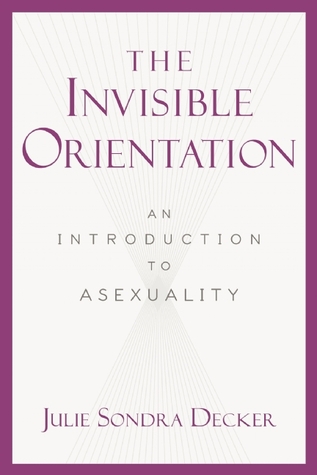
But what’s also great is it was the first appearance I made with my book!

bookdrawing


I asked attendees to enter their names to win advance reading copies. Around fifty people entered and I got to talk to quite a lot of amazing people who were really excited about the book coming out. And there were a few who treated me like a celebrity or excitedly told me how much they like my videos online. How nice!

And after attending sessions and sitting on panels all day, I rounded out the night by appearing on Canadian national television.

ctv

Click to watch the video!

So yeah, that was a good experience. Hanging out with new and old friends was also fun–I was staying with asexual friends in a hotel, some of whom I’d known on the Internet before and some of whom I was getting to know for the first time.  I didn’t stay for the parade–just the conference–but I’m glad I got to go.

Hooray for visibility and connections!